Lightweight Suit Fabrics Chiang Mai: Best Options for Hot Weather
Customers exploring Italian suit fabrics will find many lightweight wool options with different weaves, weights and finishes. Choosing Lightweight Suit Fabrics Chiang Mai becomes especially important when a suit needs to remain comfortable in warm and humid conditions while still looking refined. Chiang Mai’s climate can make a heavy suit feel uncomfortable surprisingly quickly, particularly when moving between air-conditioned interiors and outdoor spaces. For professionals, tourists, wedding guests and destination grooms, the right fabric can make a significant difference to how enjoyable a suit feels throughout the day.
The important point is that lightweight does not automatically mean better. A fabric can be extremely thin and still be unsuitable for regular business use if it creases excessively, lacks structure or does not recover well after movement. Another cloth may be slightly heavier but provide better airflow, durability and drape, making it considerably more practical. Understanding these differences is essential when comparing Lightweight Suit Fabrics Chiang Mai for a custom garment.
Chiang Mai also has an international tailoring market, which means customers are not always buying suits for the climate in which they order them. A local professional may need a warm-weather suit throughout the year, while a European tourist may take the finished garment home and wear it in a completely different environment. The best fabric therefore depends on climate, profession, destination, occasion and frequency of use rather than temperature alone.
What Makes a Suit Fabric Suitable for Hot Weather?
The performance of Lightweight Suit Fabrics Chiang Mai depends on several characteristics working together. Fibre composition, fabric weight, weave, density and finishing can all influence how a cloth feels against the body. A fabric that permits reasonable airflow and does not trap unnecessary heat can feel much more comfortable than a dense cloth, even when the difference in weight appears relatively small.
Breathability is particularly useful because a suit naturally creates another layer between the body and the surrounding environment. When the cloth permits some movement of air, heat can escape more easily and the garment may feel less restrictive. This becomes particularly noticeable when walking outdoors, attending an event without constant air conditioning or spending several hours moving between different locations.
Moisture is another consideration. Warm weather can cause perspiration even when the fabric itself is lightweight, so the garment should be designed to avoid creating unnecessary layers around the body. Natural fibres and breathable constructions can help, although no suit can completely eliminate the effects of high temperatures. Good tailoring simply reduces avoidable discomfort while maintaining the appearance expected from a refined garment.
Lightweight Wool Is a Strong All-Round Choice
When discussing Lightweight Suit Fabrics Chiang Mai, wool deserves more attention than it sometimes receives. The word wool is often associated with cold-weather clothing, but fine lightweight wool can be breathable, versatile and exceptionally appropriate for warm-weather tailoring. The key distinction is between lightweight cloth designed for warmer conditions and the heavier fabrics traditionally associated with winter suits.
Lightweight wool can provide an attractive combination of structure, drape and professional appearance. It can maintain the clean character expected from business tailoring without creating the heavy feeling associated with dense winter cloth. For customers who need a suit that moves between meetings, dinners and travel, this balance can make lightweight wool particularly useful.
Italian origin should not be the only reason for choosing a cloth, however. The more important question is how a particular fabric behaves and whether its characteristics match the customer’s actual requirements. A premium cloth is most valuable when its performance suits the garment.
Tropical Wool and Open Weaves
Tropical wool can be especially interesting for customers searching for Lightweight Suit Fabrics Chiang Mai because some tropical constructions are designed to encourage greater airflow. An open weave can create a lighter wearing experience while preserving enough structure for professional tailoring. This can be useful when a suit needs to move beyond air-conditioned offices and remain comfortable outdoors.
Open-weave fabrics can also have an appealing visual texture. Depending on the cloth, the surface may appear slightly more dimensional than a compact business fabric, creating a relaxed but sophisticated character. However, openness can also influence durability and opacity, so the exact cloth should always be evaluated rather than assuming that every breathable weave performs identically.
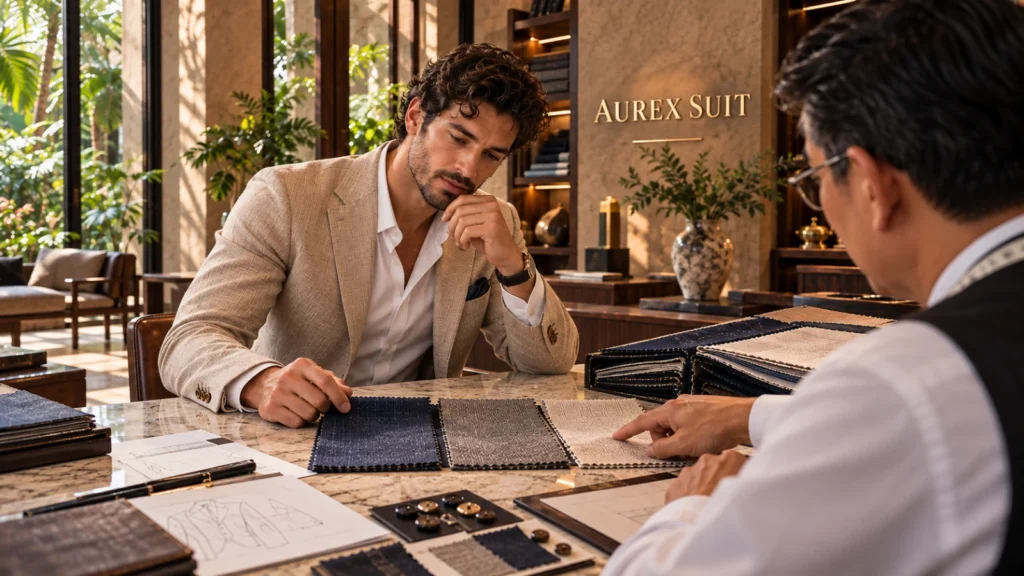
This is why physically comparing fabrics during a tailoring consultation can be valuable. Holding different cloths allows the customer to notice differences in flexibility, surface texture and weight that photographs cannot communicate. The tailor can then explain how each option is likely to behave once turned into a complete jacket and trouser combination. Customers exploring Cotton Suiting Fabrics Chiang Mai will find many lightweight wool options with different weaves, weights and finishes.
Linen for Relaxed Warm-Weather Tailoring
Linen is naturally associated with hot weather because it is breathable and has a distinctive dry texture. For Lightweight Suit Fabrics Chiang Mai, it can be an excellent choice when the desired garment has a relaxed summer character rather than a highly formal corporate appearance. Its natural texture can make a suit feel lighter visually as well as physically.
The main characteristic to understand is linen’s tendency to crease. That does not necessarily make it unsuitable. In fact, the relaxed creasing is part of linen’s identity and can work beautifully for destination weddings, garden events, resort occasions and informal evening gatherings. The question is whether that natural character matches the situation in which the suit will be worn.
A highly formal business environment may call for a cloth that remains crisper throughout the day, while a destination celebration can benefit from linen’s relaxed personality. Fabric selection should therefore consider the occasion and desired appearance alongside the weather.
Linen-Wool Blends
Linen-wool blends can provide an interesting middle ground for customers who want breathability without moving completely toward relaxed linen tailoring. Combining fibres can create a cloth with a useful balance between texture, airflow and drape. The exact result depends on the composition and construction, so each fabric should be considered individually.
For Lightweight Suit Fabrics Chiang Mai, a linen-wool blend can be particularly useful when a customer wants a summer suit that feels relaxed but still retains a refined tailoring character. Wool can contribute structure and drape, while linen can add natural texture and a lighter visual impression. This combination can work well for social occasions and less formal professional environments.
Blended fabrics also demonstrate why fabric selection should not become a competition between individual fibres. The real question is how the finished cloth behaves. Weight, weave, texture, recovery and construction all contribute to the final wearing experience.
Can Cotton Work in Chiang Mai?
Cotton can have a useful role in warm-weather tailoring, particularly when the customer wants a softer and more relaxed appearance. Cotton fabrics can feel natural against the skin and can work well for creative workplaces, smart-casual business environments, travel and daytime occasions. They can also provide useful variety for someone who already owns several traditional wool suits.
The trade-off is that cotton can crease differently and may not provide the same recovery or drape as wool. That does not make it inferior; it simply gives the garment a different character. A cotton suit should be selected because its relaxed qualities are desirable, not merely because the temperature is high.
For customers researching Lightweight Suit Fabrics Chiang Mai, cotton therefore belongs among the options worth considering, but its suitability depends heavily on the purpose of the garment. A formal business wardrobe and a relaxed summer wardrobe may require very different solutions.
Fabric Weight Is Not the Whole Story
One of the biggest misconceptions about Lightweight Suit Fabrics Chiang Mai is that the lowest fabric weight automatically represents the coolest or most comfortable option. Weight is useful information, but it cannot explain everything about a cloth. Fibre, weave, finishing and density can all change the way the material behaves.
The construction of the jacket also matters. A lightweight fabric combined with a heavy lining and substantial internal structure may not feel particularly light when worn. Conversely, a carefully constructed jacket using breathable cloth and appropriate internal materials can feel much easier to wear.
This is why customers should discuss fabric and construction together. Ask how the selected cloth will be constructed, what lining is appropriate and whether the finished garment is intended for regular warm-weather use. Those questions can reveal more than the simple description “summer fabric.”
Lightweight Suit Fabrics Chiang Mai – The Importance of the Lining
The lining is largely hidden from view, but it influences how a jacket feels. Traditional full lining can provide a smooth interior and contribute to structure, while lighter construction approaches can reduce the amount of material surrounding the body.
There is no universal lining solution for every lightweight suit. Some fabrics need more internal support to maintain their shape, while others can benefit from a lighter construction. The appropriate approach depends on the fabric, garment style, level of formality and intended climate.
For anyone comparing Lightweight Suit Fabrics Chiang Mai, this is an important reminder that fabric is only one component of the finished garment. Comfort comes from the relationship between cloth, pattern, lining and construction.
Lightweight Suit Fabrics Chiang Mai – Fit Matters Even More in Warm Weather
A breathable fabric cannot compensate for an incorrectly fitted suit. If the jacket is excessively tight around the chest or waist, the wearer may feel restricted regardless of how light the cloth is. An oversized garment can also become uncomfortable because unnecessary fabric creates additional layers around the body.
A good warm-weather suit should allow natural movement while maintaining clean proportions. Shoulder placement, chest balance, sleeve length, jacket length and trouser proportions all contribute to comfort. Custom tailoring allows these details to be considered around the individual’s actual body rather than relying entirely on standard sizing.
This makes fit an important part of the Lightweight Suit Fabrics Chiang Mai conversation. Fabric and pattern should support each other so the finished garment feels comfortable without losing the structure and refinement expected from quality tailoring.
Lightweight Suit Fabrics Chiang Mai – Choosing a Fabric for Business Wear
Business clothing requires a careful balance between comfort and professionalism. A suit for client meetings, presentations and formal office environments generally needs enough structure to maintain a polished appearance throughout the day.
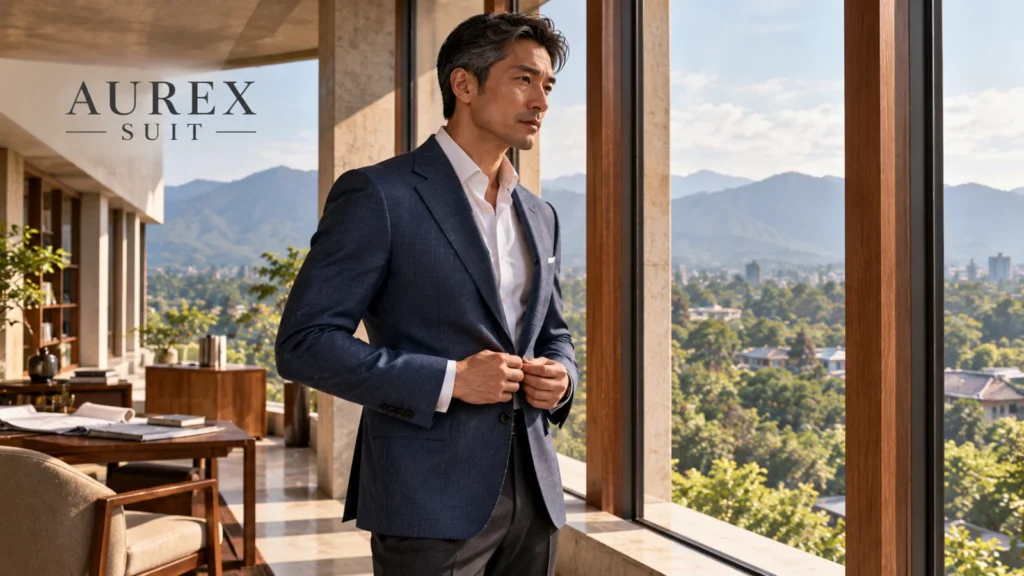
Lightweight wool can be particularly useful because it combines a professional surface with relatively low weight and good drape. Navy, charcoal and medium grey are also practical choices because they can work with a wide range of shirts and accessories.
For customers building business suits in Chiang Mai, versatility should be considered from the beginning. A lightweight suit that works with several shirts and shoes can provide considerably more value than a highly specialized garment that is difficult to coordinate.
Lightweight Suit Fabrics Chiang Mai – Choosing Fabric for Weddings
Wedding tailoring has different priorities because the suit must remain comfortable while also looking excellent in photographs. An outdoor daytime ceremony may place greater emphasis on breathability, while an evening celebration can support darker colours and more formal cloth.
Linen, linen blends and lightweight wool can all work depending on the venue and dress code. A relaxed destination wedding may suit textured natural fabrics, while a formal evening event may benefit from a refined lightweight wool with a cleaner surface.
For customers considering wedding suits, the venue, time of day and level of formality should be discussed before the fabric is selected. The lightest fabric is not automatically the best wedding fabric; the garment still needs to look appropriate for the occasion.
Lightweight Suit Fabrics Chiang Mai – What Tourists Should Know
Tourists searching for Lightweight Suit Fabrics Chiang Mai should tell the tailor where they expect to wear the finished suit after leaving Thailand. A customer returning to Northern Europe may need a more versatile fabric than someone returning to another tropical destination. The climate of the customer’s home country can therefore be just as relevant as Chiang Mai’s weather.
This information can change the recommendation considerably. A suit purchased during a short holiday should not be optimized only for the few days spent in Thailand. It should also make sense within the customer’s existing wardrobe and future lifestyle.
For international visitors, this is one of the advantages of discussing the complete use case with a tailor. The goal is not simply to find a cool fabric for Chiang Mai, but to create a garment that remains useful after the journey home.
Lightweight Suit Fabrics Chiang Mai – What Makes a Good Travel Suit?
Travel creates its own demands because a suit may spend time folded inside luggage, worn during transportation and then expected to look presentable at a meeting or dinner. Crease recovery, durability and versatility can therefore matter almost as much as breathability.
Lightweight wool can be useful for this reason, depending on the specific cloth. Some fabrics recover well after travel and can maintain a polished appearance without excessive attention. The exact performance varies, so customers should ask about the characteristics of the actual cloth rather than assuming every lightweight fabric behaves the same way.
For frequent travellers, Lightweight Suit Fabrics Chiang Mai should therefore be evaluated from both a climate and travel perspective. A fabric that feels excellent in Thailand but becomes impractical after packing may not be the most useful investment.
Lightweight Suit Fabrics Chiang Mai – Colour and Texture Matter
Warm-weather tailoring does not require pale colours. Navy, charcoal and medium grey can all work beautifully in lightweight fabrics, particularly when the customer needs a professional appearance. Lighter shades such as beige, stone and soft blue can create a more relaxed summer character for social occasions.
Texture can also influence how formal the garment appears. A smooth lightweight wool can look highly professional, while a linen or linen-wool texture can create a softer and more relaxed impression.
When choosing Lightweight Suit Fabrics Chiang Mai, consider how the fabric will interact with the rest of the wardrobe. Someone who already owns several dark business suits may benefit from a lighter textured cloth, while a first-time buyer may gain more value from a versatile navy or grey.
Lightweight Suit Fabrics Chiang Mai – How to Compare Fabrics at a Tailor
Do not judge fabric only by its appearance under showroom lighting. Hold different cloths, compare their weight, examine their texture and notice how easily they bend. Ask how each fabric is expected to behave in warm conditions and whether it is appropriate for frequent or occasional wear.
It can also be useful to see the cloth under natural light because subtle textures and colours can appear different outdoors. This matters particularly when the suit will be worn regularly in Chiang Mai rather than almost exclusively inside air-conditioned environments.
A good consultation around Lightweight Suit Fabrics Chiang Mai should help the customer understand the reasoning behind each recommendation. The aim is to make an informed decision rather than simply selecting the fabric with the most impressive description or highest price.
Lightweight Suit Fabrics Chiang Mai – Building a Warm-Weather Wardrobe
One well-chosen lightweight suit can become the foundation of a versatile warm-weather wardrobe. A navy or medium-grey lightweight wool suit can work with white and pale blue shirts for professional settings, while a textured jacket can later be worn separately with trousers for less formal occasions.
Adding custom suits can expand the number of combinations without requiring multiple suits. Different collars, colours and subtle patterns can change the appearance of the same tailoring foundation while keeping the wardrobe practical.
For customers living in Chiang Mai, this approach can be especially useful because warm-weather clothing may be needed for much of the year. Building a smaller collection of garments with clearly different purposes can often be more practical than accumulating numerous similar suits.
Lightweight Suit Fabrics Chiang Mai – When Lightweight Is Not the Best Choice
There are situations where a heavier fabric may actually be more appropriate. If the suit will mainly be worn in a cold home country, during winter travel or for formal occasions in cooler climates, choosing a fabric solely because it performs well in Chiang Mai could produce the wrong result.
Frequency of wear also matters. A very delicate or open fabric may be excellent for occasional summer events but less suitable for someone wearing the same suit several times every week. Durability and maintenance should always be considered alongside comfort.
The goal of Lightweight Suit Fabrics Chiang Mai is therefore not to find the thinnest possible cloth. The goal is to find a fabric that performs well for the person, the climate and the purpose of the garment.
Lightweight Suit Fabrics Chiang Mai – Choosing the Right Tailor
When comparing tailoring options, pay attention to how the fabric discussion is handled. A good consultation should consider your profession, travel habits, climate, occasion and frequency of wear rather than simply showing you the most expensive fabrics available.
It is also worth examining finished garments where possible. Look at the balance of the jacket, shoulder construction, fabric quality, trouser proportions and overall finishing. These details can reveal whether the tailor understands how fabric, pattern and construction need to work together.
For customers exploring Bespoke Shirts Chiang Mai , the quality of the consultation can be as informative as the fabric selection itself. A thoughtful tailor should be able to explain the advantages and compromises of different options without turning the conversation into an aggressive sales pitch.
Lightweight Suit Fabrics Chiang Mai – The Aurex Suit Perspective
At Aurex Suit, warm-weather tailoring should begin with the individual rather than with a predetermined fabric. Chiang Mai’s climate is important, but so are the client’s profession, destination, wardrobe, occasion and expectations for the finished garment.
For someone researching Lightweight Suit Fabrics Chiang Mai, this means looking beyond the simple question of which cloth feels coolest. A business traveller may need crease recovery and versatility, a groom may prioritize comfort and photographs, while a local professional may want a lightweight suit that becomes part of an everyday wardrobe.
The fabric is only one element of the final result. Pattern, fit, lining, construction and finishing all influence how the cloth behaves on the body. When these elements are considered together, the finished suit can feel substantially more comfortable without sacrificing the refined appearance expected from luxury tailoring.
Making the Right Choice about Lightweight Suit Fabrics Chiang Mai
The best Lightweight Suit Fabrics Chiang Mai choice is ultimately the one that matches the actual life of the garment. Lightweight wool can provide an excellent balance of refinement, structure and versatility, while linen offers natural breathability and a relaxed character. Linen-wool blends can sit between those two approaches, while cotton can provide a softer option for less formal warm-weather dressing.
For local professionals and international visitors alike, thoughtful fabric selection can make custom tailoring considerably more rewarding. A lightweight suit should not simply be thin; it should be intelligently designed for its environment, purpose and wearer. When fabric, construction and fit work together, warm-weather tailoring can deliver comfort, elegance and practical versatility without compromising the character of a genuinely refined suit.